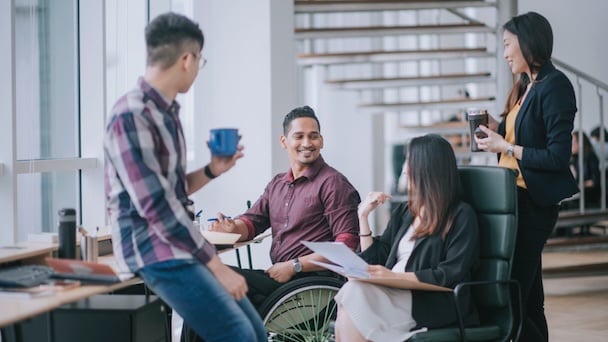
Beyond labels: creating a truly inclusive workplace

The average full time employee will spend just under 90,000 hours of their lives at work, that’s 3,515 days or 9.76 years and that’s not including any overtime!

There is a great deal of focus throughout our lives on choosing and preparing for a career path. But when we become part of the workforce, we realize the enormous difference that a workplace environment, colleagues and employer ethos can have on how much we enjoy our time at work.

A 2021 McKinsey survey found that employees who feel free to be themselves at work report 19% higher job satisfaction and 29% stronger feelings of belonging.

A recognized way to measure if employees feel free to be themselves at work is through self-identification.


What is self-identification?

In a workplace, self-identification (commonly abbreviated to Self-ID) refers to organizations inviting their employees to voluntarily disclose demographic information about themselves. This invitation could be part of the hiring process or at any point during employment.


Self-ID characteristics can include gender, race, ethnicity, sexual orientation (LGBTQIA+), disability and neurodiversity.

Self-id and disability: data with intent

Self-ID is incredibly valuable in the context of disability. Data for the sake of data does not serve the disability community well but data with intent has potential to drive real change by:

  • creating pathways to meaningful employment and career progression,
  • changing the way society perceives disability,
  • and changing ableist systems which impact individuals living with disabilities on a daily basis. 

When an organization better understands the composition of their workforce they can:

  • identify employee needs and provide appropriate resources,
  • connect individuals with peers who have similar lived experiences or identities,
  • as well as establish a baseline for goals and commitments.

The difference between self-id and sharing

Self-ID is a more formal process of a person disclosing that they have a disability, at Sodexo we invite employees to disclose this information as part of our Voice survey.


Sharing can be a person is requesting an accommodation for a disability or simply be feeling safe to be open about having a disability with a manager or colleagues. Sharing in this way only happens when an employee feels that they can trust their organization and leadership. This culture of trust needs to be cultivated and nourished by a company’s leadership and filtered to all levels. Training and resources for managers are crucial as are processes that help to hold leaders accountable for upholding inclusive and empathetic behaviors.

Creating a workplace where everyone feels comfortable

At Sodexo, we are committed to creating a workplace where everyone feels they belong and can thrive. We want all Sodexo workplaces to be environments where every employee with a disability feels safe to self-ID or simply be open about their disability in the workplace.


Hear from some of our employees about the difference self-identifying or being open about having a disability has made to their working lives:

“The wearing of face masks due to COVID removed my ability to lip read which forced me to share my hearing impairment. Whilst I felt vulnerable initially, in hindsight it allowed me to bring my whole self to work and embracing it has opened up new opportunities including helping others embrace their Superpower.”

Sally Barnett - HRBP Sodexo UK&I 

"In order to understand who I am, you need to understand where I come from and only knowing my story will you be able to put the pieces of the puzzle together. Depression doesn’t define anyone but it has certainly shaped me, in a way to be stronger and more resilient."

Abel Ariza - Managing Director, Sodexo Singapore & Malaysia

“I developed my hearing disability while working at Sodexo and I had fear about disclosing it because I thought it would impact my career, especially because my role at the time required so much interaction with clients and partners. My manager really encouraged and supported me to not only feel confident but to really embrace this new part of my identity. Today I lead the disability dimension at Sodexo and hope to help everyone with a disability to feel the same support I did.”

Joanne Neddo - Global VP DEI

Promoting self-identification in the workplace

We are committed to providing 100% of our workforce resources and initiatives supporting the inclusion of people with disabilities. In 2025 we are focusing on building a tool-kit to help facilitate the self-id process and encourage all of our employees with disabilities to feel safe and comfortable to voluntarily share about their disabilities or those of their family members so we can help support them and they can feel truly free to be themselves and ask for help when needed.

Creating a culture of trust webinar

In celebration of the International Day for People with Disabilities we are holding a webinar which will explore how building trust is essential for creating inclusive environments where employees feel empowered to self-identify.


Our panel discussion will cover practical strategies such as how to build a culture which supports self-ID and how to engage leaders and experts on the topic of accessibility.


The webinar will take place on December 9th from 2:15 - 3:30pm CET.

Register now to join us for this interactive session

More about Sodexo

  • Food

    The sustainable chef superstars fuelling your day

  • Food

    How AI is bringing true personalization to workplace dining

  • Food

    How healthy food unlocks a world of benefits